Cervicogenic Dizziness: How Physiotherapy Can Help Manage Dizziness and Neck Pain
Feeling dizzy can be unsettling. When dizziness occurs alongside neck pain, stiffness, headaches, or difficulty moving your head, it may be tempting to assume that the problem is coming directly from your neck.
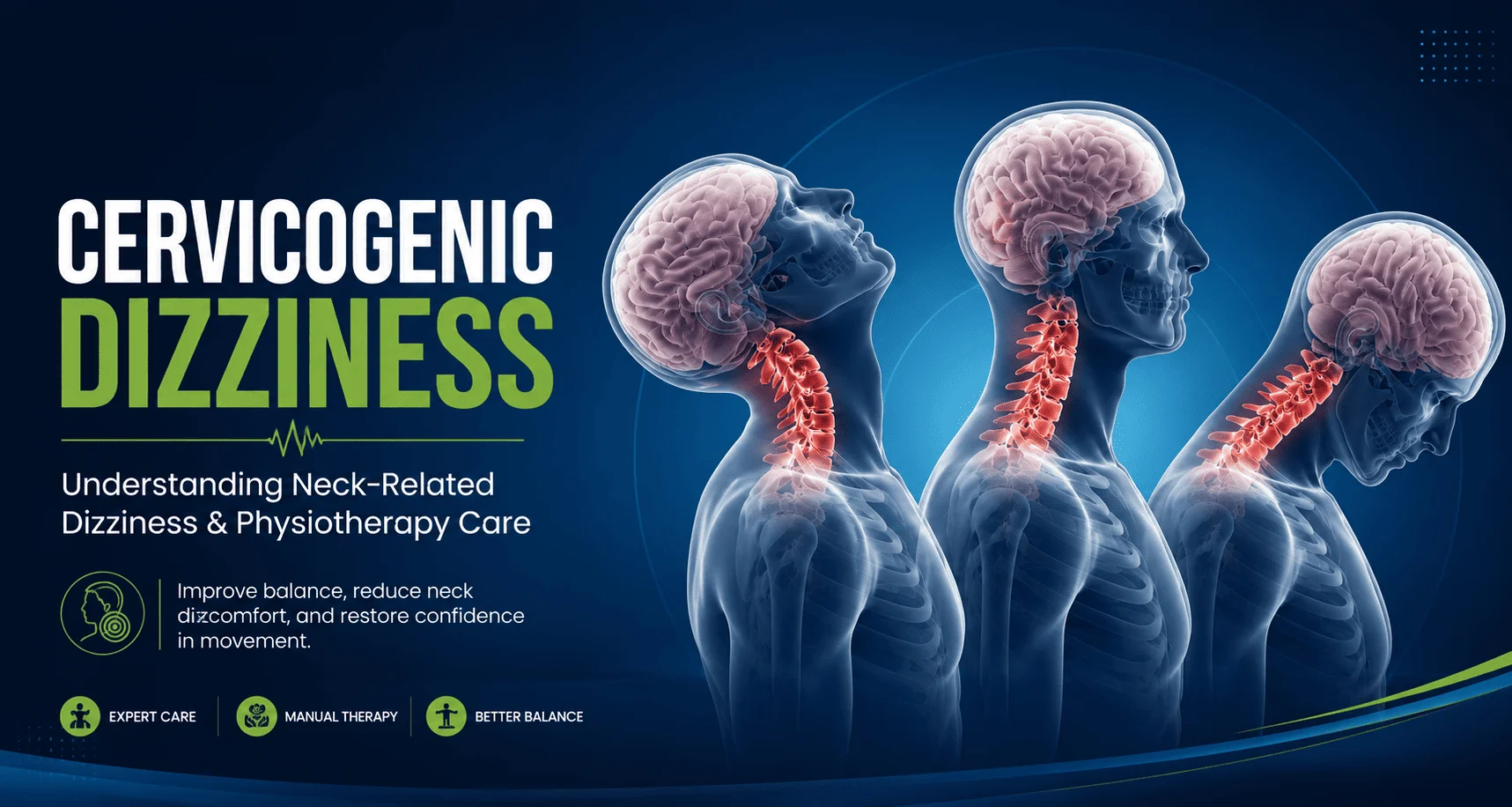
In some people, dysfunction involving the cervical spine may contribute to sensations of dizziness or unsteadiness. This presentation is often referred to as cervicogenic dizziness or cervical dizziness.
However, dizziness is complex, and the relationship between the cervical spine and dizziness remains an area of clinical debate. The Bárány Society has emphasized that there is currently no universally accepted diagnostic test proving that neck dysfunction alone causes dizziness, making careful assessment and exclusion of other causes essential.
This is why appropriate physiotherapy management should begin with a thorough assessment rather than immediately assuming that every combination of neck pain and dizziness is cervicogenic.
At Siliguri Physio, physiotherapy assessment can help identify musculoskeletal and movement-related problems involving the neck and determine whether rehabilitation may have a role in your overall management.
What Is Cervicogenic Dizziness?
Cervicogenic dizziness is a term commonly used to describe dizziness or unsteadiness that appears to be associated with dysfunction of the cervical spine.
The theory is based partly on the important sensory information coming from muscles, joints, and other structures in the neck. This information contributes to our perception of head position and interacts with visual and vestibular information involved in maintaining orientation and balance.
When these systems do not work together effectively, some people may experience symptoms involving balance, movement control, or spatial orientation. However, experts continue to debate the precise mechanisms and diagnostic criteria, which is why cervicogenic dizziness should not be treated as a simple diagnosis based only on the presence of neck pain.
What Does Cervicogenic Dizziness Feel Like?
People suspected of having a cervical contribution to dizziness may describe symptoms differently.
Possible complaints can include:
- A feeling of unsteadiness
- Light-headedness or imbalance
- Neck pain or stiffness
- Difficulty maintaining balance
- Symptoms associated with certain neck positions or movements
- Headaches
- Difficulty coordinating head and eye movements
- Reduced confidence while walking or moving
The clinical picture often involves a relationship between neck symptoms and dizziness, but these features are not specific enough to confirm that the neck is the cause. Similar symptoms can occur with vestibular, neurological, cardiovascular, visual, migraine-related, or other medical conditions.
Why Proper Assessment Is So Important
Dizziness should never automatically be assumed to originate from the cervical spine.
The first priority is to understand the pattern of symptoms and determine whether another medical or vestibular condition could be responsible.
A physiotherapist may ask questions such as:
When did the dizziness begin?
Understanding whether symptoms started after a neck injury, whiplash, illness, concussion, or without an obvious cause can help guide assessment.
What does the dizziness feel like?
Some people describe spinning, while others describe floating, light-headedness, imbalance, or general unsteadiness.
How long do the symptoms last?
Episodes lasting seconds may have different causes from symptoms that persist for minutes or hours.
What triggers your symptoms?
Your physiotherapist may ask whether symptoms occur when moving your neck, changing position in bed, standing up, walking, looking at moving objects, or performing other activities.
Do you have neck pain at the same time?
Understanding whether neck symptoms and dizziness occur together may help determine whether cervical dysfunction should be investigated.
Are there hearing, vision, neurological, or other symptoms?
These can provide important clues that further medical assessment may be necessary.
The reference management approach similarly emphasizes establishing the extent to which the cervical spine is contributing to symptoms and referring the patient for further investigation when the neck does not appear to be the main driver.
Cervicogenic Dizziness and the Body’s Balance Systems
Maintaining balance requires several systems to work together.
Your brain integrates information from your:
Vestibular system – structures within the inner ear that detect movement and head position.
Visual system – your eyes provide information about your surroundings and movement.
Proprioceptive system – sensory information from muscles and joints helps your brain understand where different parts of your body are positioned.
The neck provides an important source of proprioceptive information about head position.
One proposed explanation for cervicogenic dizziness is that altered information from the cervical spine may create a mismatch between cervical, vestibular, and visual input.
Because these systems interact closely, physiotherapy management may sometimes involve more than simply improving neck movement. Treatment may also address balance, coordination, head movement, eye-head control, and overall sensorimotor function. The Physio Network management framework is similarly built around both sensorimotor retraining and improving cervical musculoskeletal function.
How Can Physiotherapy Help With Cervicogenic Dizziness?
Physiotherapy treatment should be individualized according to the findings of the assessment.
When cervical dysfunction appears to be clinically relevant, management may focus on two broad areas:
1. Improving cervical spine function
This may involve addressing neck pain, restricted movement, muscle function, and movement control.
2. Improving sensorimotor control
This may involve exercises targeting balance, proprioception, and coordination between the eyes, head, neck, and body.
The exact programme depends on the patient’s symptoms, physical examination, medical history, and tolerance to exercise.
1. Balance Training
Some people experiencing dizziness also develop reduced confidence in their balance.
Physiotherapy may begin with relatively simple balance activities and gradually increase the difficulty according to the patient’s ability.
Exercises may progress from:
- Standing with a comfortable base of support
- Narrowing the position of the feet
- Tandem standing
- Single-leg balance
- Performing tasks with reduced visual input
- Walking while gradually introducing controlled head movements
The objective is to challenge the balance system progressively without unnecessarily aggravating symptoms.
The expert framework described by Physio Network similarly progresses static balance toward more difficult positions and dynamic tasks such as walking with controlled head movements.
2. Head, Eye, and Body Coordination Exercises
Moving your head while maintaining visual focus requires coordination between several sensory systems.
Depending on the assessment, a physiotherapist may introduce controlled exercises involving movement of the eyes, head, or trunk.
For example, rehabilitation may involve maintaining focus on a target while gradually moving the head or learning to coordinate eye movement followed by head movement.
These exercises are not suitable for every person with dizziness and should be selected according to the suspected cause and individual presentation. The reference approach includes gaze stabilization, eye-head coordination, trunk-head coordination, and smooth-pursuit activities as potential components of sensorimotor rehabilitation.
3. Cervical Proprioception Training
Proprioception is your body’s ability to sense position and movement.
Because sensory receptors within the neck contribute information about head position, cervical proprioception may be assessed when neck dysfunction and dizziness occur together.
One rehabilitation approach involves practising the ability to accurately return the head to a neutral position after moving it.
More advanced exercises may challenge the patient to control slow and precise head movements.
For example, some physiotherapy programmes use visual targets or laser-based feedback to help patients improve awareness and control of cervical movement.
The management approach outlined in the source article includes both joint-position retraining and movement-sense exercises for selected patients.
4. Improving Neck Mobility
Pain and stiffness may limit cervical movement.
When restricted neck mobility is identified during assessment, physiotherapy may incorporate appropriate movement exercises designed to gradually restore comfortable range of motion.
Exercises may involve controlled:
- Neck rotation
- Flexion and extension
- Side bending
- Combined functional movements
Progression should depend on the individual’s symptoms rather than forcing movement into painful ranges.
The aim is to improve comfortable movement while allowing the patient to participate more effectively in their rehabilitation programme.
5. Manual Therapy
Manual therapy may sometimes be included when cervical joint or soft-tissue restrictions are considered clinically relevant.
Physiotherapists may use different hands-on techniques depending on the assessment findings.
The purpose may be to:
- Reduce neck discomfort
- Improve cervical mobility
- Facilitate more comfortable movement
- Support participation in active rehabilitation
Clinical research has investigated manual therapy for patients diagnosed with cervicogenic or cervical dizziness, with some trials reporting improvements in dizziness-related symptoms and cervical mobility. However, the overall condition itself remains diagnostically controversial, so manual therapy should be considered part of an individualized programme rather than proof that dizziness originates from the neck.
The Physio Network framework also positions manual therapy alongside exercise and sensorimotor retraining rather than using hands-on treatment as the sole management strategy.
6. Neck Muscle and Motor Control Training
Some patients may have difficulty controlling cervical movement efficiently.
Physiotherapy may therefore include exercises targeting the muscles responsible for supporting and controlling the head and neck.
Early exercises may focus on movement quality rather than heavy strengthening.
Depending on the patient, rehabilitation may progress toward improving:
- Deep neck flexor control
- Cervical extensor control
- Neck movement coordination
- Endurance
- Functional strength
As control improves, exercises can gradually become more challenging.
The expert programme described in the reference article similarly progresses cervical motor control exercises from supported positions toward more demanding functional tasks.
7. Scapular and Upper-Body Rehabilitation
The neck does not function in isolation.
Movement and control of the shoulder blades and upper back can influence how the cervical region manages everyday activities.
When clinically appropriate, physiotherapy may include exercises targeting scapular control and upper-body strength.
This may involve exercises for:
- Scapular positioning and movement
- Shoulder stability
- Upper-back strength
- Postural endurance
- Functional upper-limb activities
The goal is not to create one supposedly “perfect” posture, but to help the person move comfortably and tolerate the physical demands of daily life.
Scapular motor-control training is also one of the components included in the reference cervicogenic dizziness management programme.
8. Posture and Movement Habits
People who spend long periods working at computers, looking at mobile devices, driving, or maintaining one position may experience neck discomfort.
A physiotherapist may therefore assess how your symptoms respond to different positions and activities.
Advice may include:
- Changing positions regularly
- Taking appropriate movement breaks
- Adjusting workstation setup
- Reducing prolonged static positions
- Gradually increasing activity tolerance
Postural recommendations should be individualized. The management approach in the reference article similarly emphasizes patient-specific postural correction rather than applying identical positioning advice to everyone.
What Happens When Dizziness Has More Than One Cause?
Not every patient fits neatly into a single diagnostic category.
A person may have neck pain and cervical dysfunction while also having:
- A vestibular condition
- Migraine-related dizziness
- Post-concussion symptoms
- Visual problems
- Another medical condition
In these situations, physiotherapy for the neck may still be helpful for cervical symptoms, but it may represent only one part of the overall management plan.
The Physio Network article specifically discusses these “mixed” presentations and emphasizes the importance of appropriate referral when other systems may be contributing.
This multidisciplinary approach is particularly important because major vestibular experts have highlighted the difficulty of establishing a direct causal relationship between cervical dysfunction and dizziness.
When Should You Seek Urgent Medical Attention for Dizziness?
Dizziness can sometimes occur with serious medical conditions.
Seek urgent medical assessment if dizziness is sudden or severe or occurs with symptoms such as:
- New weakness or numbness
- Difficulty speaking
- Significant loss of coordination
- Fainting or loss of consciousness
- New double vision or severe visual disturbance
- Sudden severe headache
- Chest pain
- Significant difficulty walking
- New neurological symptoms
New, unexplained, persistent, or rapidly worsening dizziness should be medically evaluated before assuming it is caused by the neck.
The Bottom Line
Dizziness combined with neck pain does not automatically mean that the neck is causing the dizziness.
Cervicogenic dizziness remains a complex and debated clinical presentation, and appropriate assessment is essential to investigate cervical involvement while considering vestibular, neurological, visual, cardiovascular, and other possible causes.
When cervical musculoskeletal or sensorimotor problems appear to be contributing, physiotherapy may include:
Neck Mobility → Balance Training → Cervical Proprioception → Eye-Head Coordination → Motor Control → Strength & Functional Rehabilitation
This reflects the multimodal management framework used in the Physio Network reference article.
Physiotherapy for Dizziness and Neck Pain in Siliguri
If you are experiencing persistent dizziness alongside neck pain, stiffness, balance problems, or difficulty moving your head, an appropriate assessment can help clarify which factors may be contributing to your symptoms.
At Siliguri Physio, the clinic provides physiotherapy services with an emphasis on personalized treatment and rehabilitation, with home-visit availability also advertised through its website.
Contact Siliguri Physio to schedule a physiotherapy assessment for neck pain, mobility problems, balance difficulties, or associated dizziness.
A personalized rehabilitation programme may help address relevant neck dysfunction, restore movement, improve balance and coordination, and support a safer return to everyday activities.
Medical Disclaimer: This article is for general educational purposes only. Dizziness has many possible causes and should not be self-diagnosed as cervicogenic dizziness. New, severe, unexplained, or worsening dizziness requires assessment by an appropriate healthcare professional.