Benefits of Physiotherapy in Paralysis Recovery
Paralysis can have a profound impact on a person’s physical abilities, independence, and overall quality of life. Whether caused by stroke, spinal cord injury, neurological disorders, or trauma, paralysis often results in muscle weakness, loss of movement, impaired balance, and difficulty performing daily activities. Physiotherapy plays a vital role in helping individuals regain function, improve mobility, and achieve the highest possible level of independence during recovery.
Understanding the Role of Physiotherapy in Paralysis
Physiotherapy is one of the most effective rehabilitation approaches for individuals living with paralysis. Through personalized treatment plans, physiotherapists work to strengthen muscles, improve joint mobility, enhance coordination, and stimulate the nervous system to encourage functional recovery. Research and clinical practice consistently show that physiotherapy can improve muscle strength, balance, posture, mobility, and the ability to perform everyday tasks.
Key Benefits of Physiotherapy for Paralysis Patients
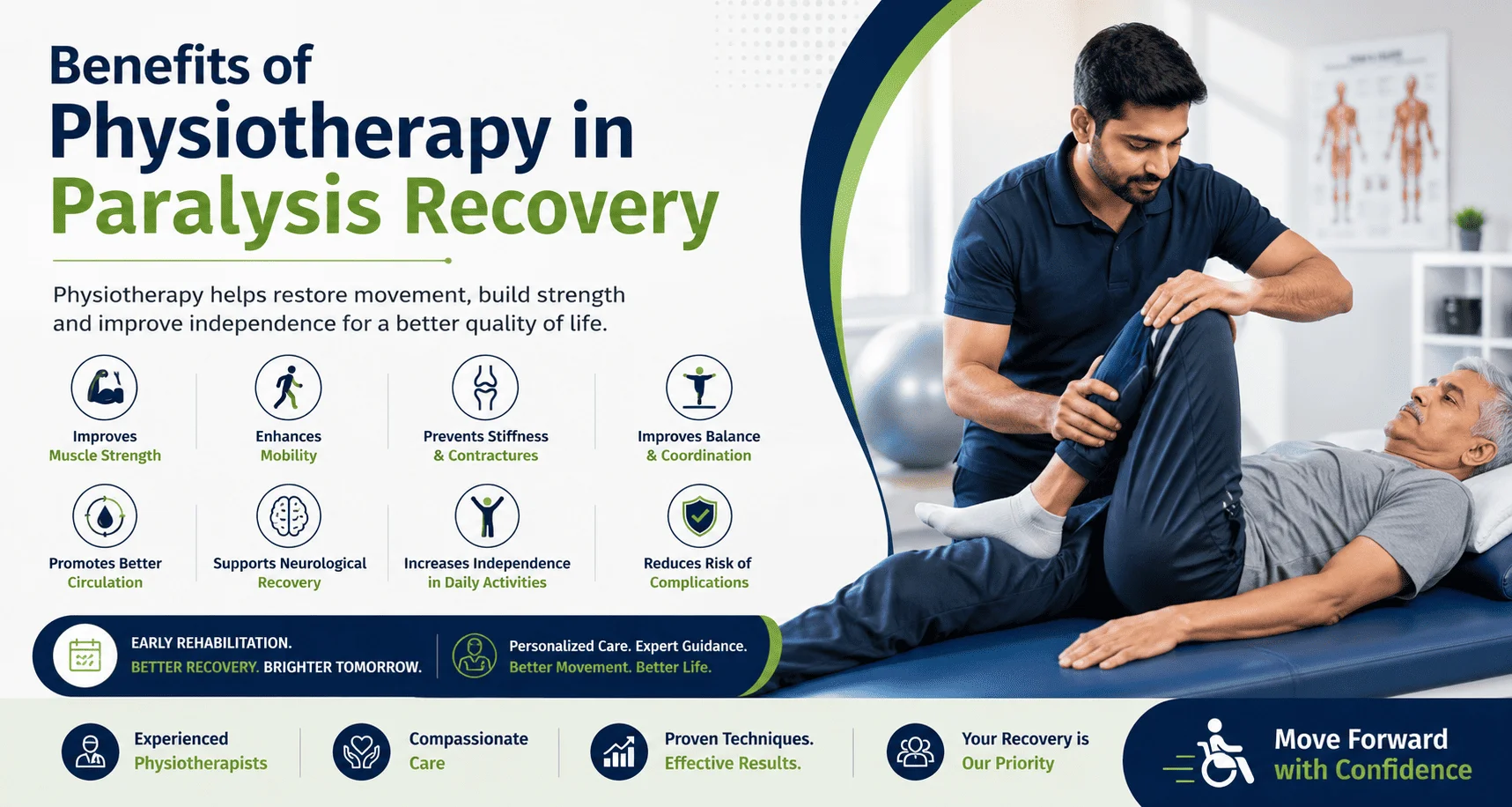
1. Improves Muscle Strength
Paralysis often leads to muscle weakness and loss of muscle mass due to reduced movement. Physiotherapy includes targeted strengthening exercises that help activate muscles, improve endurance, and maintain muscle function. Regular therapy can prevent muscle deterioration and support better physical performance.
2. Enhances Mobility and Movement
One of the primary goals of physiotherapy is to help patients regain movement and mobility. Physiotherapists use guided exercises, gait training, balance training, and neuromuscular re-education techniques to improve walking patterns and functional movement. These therapies encourage the nervous system to develop new pathways that support recovery.
3. Prevents Joint Stiffness and Contractures
When muscles remain inactive for long periods, joints can become stiff and difficult to move. Physiotherapy includes stretching exercises and range-of-motion techniques that help maintain flexibility, preserve joint health, and prevent contractures that may limit future recovery.
4. Improves Balance and Coordination
Many paralysis patients struggle with balance and coordination, increasing the risk of falls and injuries. Physiotherapists design specialized exercises that improve posture, core stability, and coordination, helping patients move more safely and confidently.
5. Promotes Better Circulation
Reduced mobility can negatively affect blood circulation and increase the risk of complications. Physiotherapy encourages movement and muscle activity, which helps improve blood flow, supports tissue health, and reduces the likelihood of secondary complications associated with prolonged immobility.
6. Supports Neurological Recovery
The human brain has an incredible ability to adapt through a process known as neuroplasticity. Physiotherapy exercises stimulate the brain and nervous system, helping the body relearn movements and improve communication between nerves and muscles. This is especially important for stroke-related paralysis and neurological rehabilitation.
7. Increases Independence in Daily Activities
Physiotherapy helps patients regain the skills needed for everyday activities such as sitting, standing, transferring, walking, and self-care. Improved functional ability often leads to greater independence and a better quality of life for both patients and their families.
8. Reduces the Risk of Secondary Complications
Individuals with paralysis are more vulnerable to complications such as pressure sores, muscle atrophy, respiratory problems, and poor posture. Regular physiotherapy helps minimize these risks while supporting long-term health and wellbeing.
The Importance of Early Intervention
Starting physiotherapy as early as possible after the onset of paralysis can significantly improve recovery outcomes. Early rehabilitation helps maintain muscle activity, preserve joint mobility, prevent complications, and maximize the body’s ability to recover. Consistent therapy often leads to better long-term results and greater functional improvement.
Personalized Physiotherapy at Siliguri Physio
At Siliguri Physio, we understand that every paralysis case is unique. Our experienced physiotherapists develop personalized rehabilitation programs tailored to each patient’s condition, goals, and recovery stage. We focus on improving mobility, strengthening muscles, enhancing balance, and helping patients regain confidence in their daily lives.
Through compassionate care, evidence-based treatment techniques, and ongoing support, we strive to help paralysis patients achieve the best possible recovery and improve their overall quality of life.
Conclusion
Physiotherapy is a cornerstone of paralysis rehabilitation. From improving muscle strength and mobility to enhancing independence and preventing complications, it provides numerous benefits that can transform the recovery journey. With professional guidance, dedication, and a structured rehabilitation plan, many paralysis patients can make meaningful progress toward a more active and independent life.
If you or a loved one is recovering from paralysis, contact Siliguri Physio today to learn how our specialized physiotherapy programs can support your recovery journey.